Thursday, July 19, 2007
Saturday, February 24, 2007
Saturday, February 17, 2007
Review: The Prophet of Yonwood Looks Bleak
The Prophet of Yonwood - Jeanne DuPrau, B-Readers who enjoyed the first two books in the City of Ember series will likely be disappointed by Yonwood. While DuPrau again develops the main character with considerable skill, the story moves much too slowly and never reaches its expected destination. Most readers hoped this book would elaborate on the events leading up to the Disaster and the rush to preserve mankind underground in Ember. DuPrau doesn't truly address these topics until the afterword, and when she does, the information is so sparse and condensed that the reader is left frustrated and underwhelmed.
Instead of describing the building of Ember and its settlement as expected, DuPrau explores the themes of misguided religious devotion, intolerance, and authoritarianism. Perhaps this was an attempt to explain the cause of the Disaster (a theme already explored in Sparks), but her tactic failed. Her moral perspective is confusing at best and dangerous for young teens.
The story takes place in Yonwood, where a woman has had a vision of the world utterly destroyed by nuclear war. The townspeople hail her a prophet of God. 11-year-old Nickie, armed with big plans and an even larger curiousity, travels to Yonwood with her aunt to fix up an old home. There she meets Mrs. Beeson, who claims to be able to interpret the prophet's messages, supposing them to be instructions from God on how to protect her town from nuclear disaster. Ambitious Nickie becomes ensnared in her misguided witch-hunt for all "sinners."
DuPrau's use of Beeson to illustrate the folly of misguided, fanatical religious devotion could have been very successful had she used another character as her antithesis, someone who could demonstrate authentic faith. As a result of this omission, the reader does not have any idea of what true religious devotion looks like, or even if there is such a thing.
While the theme of intolerance appears throughout the book when Beeson and Nickie ostracize people who "feel wrong," it is also this theme that DuPrau uses as the eventual cause of the Disaster. Nickie struggles several times to understand tough religious issues involving God's will and the fate of nations. She wonders, if two warring parties both pray to God to help them win a war, how does God answer? Whose side is He on? Disturbingly, she never finds answers to these questions. In the afterword, the narrator divulges that the Disaster eventually ravaged the earth after two powerful groups, both insisting they had the truth and God on their side, refused to back down. The implication is that no one can know for sure what truth is. Truth isn't absolute. And those who insist on being right, who follow their faith at all costs, are the true enemies of the world.
Ironically, it is this philosophy, that there is no absolute truth and that those who claim to know the only truth are intolerant, that is the greatest enemy to the true peace of mankind. If a person believes this, they will never find the source of Life, Peace, and Hope. Only in placing faith in One Way, one man Jesus Christ, who is the "way, the truth, and the life," can we find the salvation of our souls, peace with God, and the hope of a secure eternal home.
DuPrau addresses the theme of authoritarianism as Mrs. Beeson and her followers try to build a "shield of goodness" around Yonwood, which would somehow cause God to spare them from the impending disaster. Since Mrs. Beeson belongs to the inner circle of people with access to the prophet, she uses her newfound power to make life miserable for people she dislikes, those who are unusual, and those who won't fall in line and do exactly what she says. Beeson punishes those who disobey her by shackling them with an unbreakable bracelet that emits a piercing humming sound. "Undesirables" either leave town or comply. Of the three major themes, DuPrau handles this one appropriately, showing readers the dangers of blindly following a leader who has no accountability and whose moral compass doesn't point north but instead wavers like a drunken man. Again, though, DuPrau does not reveal how readers can find the true source of truth, the Word of God confirmed by the resurrection of Jesus Christ.
Readers will be underwhelmed by this book and left confused as to what truly is the source of truth and righteousness. Use this book as a springboard for discussion about truth claims and religious devotion.
Saturday, November 04, 2006
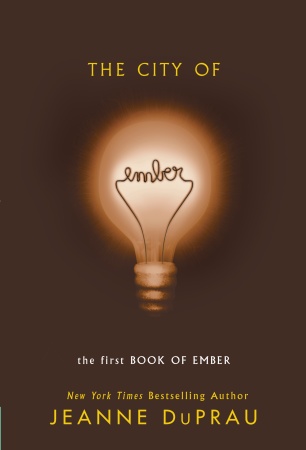
The City of Ember--Overview and Review
A masterful work of science fiction, The City of Ember launches DuPrau's promising career. The story brims with strong images and extended metaphors, undergirded with a lucid style that is easy to read. At its heart, Ember is a salvation story with many clear parallels to Plato's Allegory of the Cave.
The main characters, Lina and Doon, grow up in a city where darkness reigns except for the ever-present streetlights and lights inside houses. Darkness, too, creates a seemingly impenetrable barrier around their known world, so that schoolchildren are taught that Ember is the only city that is and nothing else exists beyond the Unknown Regions.
At twelve years of age, Lina, Doon, and her classmates randomly select their occupation. Each is assured that their job is a small but vital part in ensuring that the social machinery of Ember keeps working. "Ember will prosper if all citizens will do their best," says the mayor. Yet, Doon along with a growing number of disgruntled denizens are aware that the city faces dreadful, insurmountable problems. Food shortages. Blackouts. Some (mostly) new supplies and equipment can be found, but only at great price. Pleased at having received her favorite job, Lina is baffled by her former friend's pesimism, that is, until the electricity blackouts begin occuring more frequently and the rumors of major supply shortages prove to be too true to ignore.
It seems that the mysterious Builders of Ember, who stocked the city full of food and supplies in the first place, either miscalculated or something has gone horribly wrong. When the Builders created the city, they expected that people would live there for only 200 years. After the alotted time, a box containing instructions was to open, informing the mayor of the next steps to take. Tragically, this message was lost. Now, in the year 251, the hydro-electric generator seems poised to fail, undoubtedly plunging Ember into utter blackness.
At this moment of fear and insecurity, Doon and Lina enter the workforce. Doon longs to make a mark on his world, perhaps even being the one to save the city. Just when he discovers the situation is near hopeless, his friendship with Lina is rekindled. Along with her unquenchable curiousity, she brings to the partnership a vision of a city of light that she feels in her heart is out there somewhere. As the situation becomes precarious, Lina's senile grandmother (kin to the major who lost the message) unwitttingly discovers the box with the Builder's instructions. Lina finds the message but not until after her one-year-old sister had had her chance to "inspect" it with her teeth and toddler hands.
Together, the duo work to unscramble the instructions. Just as they discover the pathway out of Ember to freedom, they also uncover the mayor's criminal plot to embezzle food and supplies. Foolishly, they inform the mayor's guards and end up as fugitives, unable to make their life-saving announcement to the public. On the run, Lina, her sister, and Doon take the only "door" out of Ember: the river the flows under the city. Stunned, the three emerge into the outside world, realizing that Ember is underground. They see for the first time moon, stars, grass, trees...sun, birds, animals. Compared with the world they had known, this new "world" is seemingly boundless. A discarded journal that they find reveals that inhabitants of Earth's cities founded Ember as a safety precaution in case of a massive disaster on the surface.
Equipped with the truth regarding the genesis of their city and the only route to salvation, they long to get the message to the others. Finally, they find another path that leads underground to a clifftop overlooking the massive cavern housing Ember and all its inhabitants. Unable to climb back down, they hurl a note to the people below, hoping someone will believe them and the town will make an exodus to safety.
Several allusions, extended metaphors, and themes make this story more intriguing than just another sci-fi childrens' story. It is Plato's Allegory of the Cave retold. Just like the discovery that Plato's enlightened man makes, the main characters find that their world was just a shadow of the near limitless world above the surface of the earth. They too face opposition by men and women who refuse to believe in the truth when they seek desperately to save their city from impending darkness. I won't elaborate much on the clear relationship between darkness and ignorance, light and truth since it is so well elucidated elsewhere.
DuPrau also uses two extended metaphors which, while common, find new life in her story: the seed and the caterpillar. When hope seems lost, Lina's mentor gives her a seed, reminding her that though it looks dead, life will emerge from beneath the soil. Across the city, Doon witnesses a caterpillar metamorphosize into a moth, giving him encouragement that an exit to freedom is imminent.
Desire is a theme that runs throughout the story. Positive desires propel both Doon and Lina to greatness. Doon longs more than anything to save his city, hoping to make his father proud. Driven by dreams of a city of light, Lina holds onto hope that there is something more to her world than what she sees. On the other hand, Lina experiences the force of lust. In the words of her mentor,
"There is so much darkness in Ember, Lina. It's not just outside, it's inside us too. Everyone has some darkness inside. It's like a hungry creature. It wants and wants and wants with a terrible power. And the more you give it, the bigger and hungrier it gets."These words remind her of the hunger she had felt for a set of colored pencils, a hunger that had caused her to neglect watching her sister, who almost became lost. This same hunger led the mayor to embezzle food and supplies for himself. Doon, too, was not exempt, letting longing find expression in anger several times in the book.
In conclusion, Ember has depths to explore below the surface that make this a fascinating beginning to DuPrau's career in science fiction.
Youth Book List
As an educator, I review quite a few books every year, looking for teaching material, recommendations, and discussion starters. Having begun a master book list covering the books that I am reading for personal pleasure, it makes sense to keep a list of the books reviewed while wearing my teacher shoes. Undoubtedly, I'll overlook several books that I read more than a year ago, but I'll try to include all the books I've reviewed since beginning my job as a sixth grade English teacher.

The Golden Compass - Philip Pullman
A young girl travels to the far north to rescue her friend while seeking to unravel the mystery of Dust and its dangerous role in her fantastic world. Pullman successfully weaves adventure, fantasy, and a bit of imaginative physics together in the first book of the trilogy His Dark Materials. (Rating: A / G.L. 6+)
Harry Potter and the Deathly Hallows - J. K. Rowling
Harry Potter demonstrates to the wizarding world the power of sacrifice, loyalty, and love as he battles Voldemort in Rowling's last HP book...an outstanding finale. Parents, screen the book for your children due to some strong language use and shocking imagery. (Rating: A / G.L. 7+)

Harry Potter and the Half-Blood Prince - J.K. Rowling
The stakes are high during year six at Hogwarts. Harry suspects Malfoy of carrying out a deadly plan for Voldemort, Snape seems to confirm Harry's long suspicions, and Dumbledore enlists Harry's help in unraveling the mystery of Voldemort and his rise to power. Year six also finds Harry and friends struggling with an equally daunting task: trying to figure out the opposite sex and the rules of love. (Rating: A / G.L.: 7+)

The Prophet of Yonwood - Jeanne DuPrau
In this prequel to The City of Ember, 11-year-old Nickie travels with her aunt to fix up an old home, armed with big plans and an even larger curiousity. She meets a Mrs. Beeson, whose ambitions to protect her town from nuclear disaster ensnare Nickie in a misguided witch-hunt for all "sinners." Readers will be underwhelmed by this book and left confused as to what truly is the source of truth and righteousness. (Rating: B- / G.L.: 6+)

The Final Storm - Wayne Thomas Batson
The conclusion of the Door Within trilogy hums with intense battle sequences, life and death struggles, wrestling for the souls of men, all the things that made the first two books enjoyable (but on a larger scale). Readers will revel and rejoice in the last few pages of the book as they imagine for themselves that final battle and the manifestation of a new Kingdom that will never end. (Rating: A+ / G.L. 5+)

The Rise of the Wyrm Lord - Wayne Thomas Batson
Readers of the first book in The Door Within trilogy may be surprised that Aiden has a minor role in this second installment, but they will surely enjoy meeting Antoinette--brave, stubborn, faithful,...hair dyed red. The action intensifies as Paragor unleases an ancient menace and the battle for men's souls wages ever more fiercely. You'll want to pick up the third book as quickly as you can. (Rating: A / Grade Level: 5+)

The People of Sparks - Jeanne DuPrau
After escaping the dying city of Ember, Lina and Doon lead their people above ground into a strange, new, marvelous, and deadly world. The Emberites find help and shelter from the people of Sparks, but as tensions mount, Lina and Doon hope to avoid the same mistakes their ancestors made which led to the great Disaster. (Rating: A- / Grade Level: 4+)

The City of Ember - Jeanne DuPrau
A masterful work of science fiction, The City of Ember launches DuPrau's promising career as a novelist. In a city where no one has the answers to food and supply shortages, where darkness reigns but for the ever-present amber streetlights, where even the Builders could not have foreseen the imminent disasters, two young heroes seek for answers. Salvation must be found! (Rating: A+ /Grade Level: 4+)
Roll of Thunder Hear My Cry - Mildred D. Taylor
Cassie's family fights to hold onto their land and livelihood in the segregated South while Cassie learns to face life with her chin up -- (A- / 6+)
Sing Down the Moon - Scott O'Dell
The Navajo branch of the Trail of Tears is illuminated from a young woman's perspective in this haunting and beautiful historical work -- (B+ / 6+)
Rascal - Sterling North
Sterling North recounts his explorations of the Wisconsin countryside with his racoon, Rascal--a true portrait of a naturalist -- (B / 5+)
Johnny Tremain - Esther Forbes
Rub shoulders with John Adams, Paul Revere, and others as you travel with Johnny through Boston on the brink of war -- (A / 6+)
The Bronze Bow - Elizabeth George Speare
Roman occupiers. Jewish zealots fomenting rebellion. A boy bent on revenging his father's death. Jesus Christ. One powerful story -- (A / 6+)
Shadowmancer - G.P. Taylor
Taylor shows his familiarity with the northeast English landscape and English myths in this ambitious attempt at Christian fantasy -- (B / 6+)
Harry Potter (#1-5) - J.K. Rowling
Controversy surrounds this hugely popular fantasy series, but few deny Rowling possesses a wide imagination and keen sense of humor (B+ / 7+)

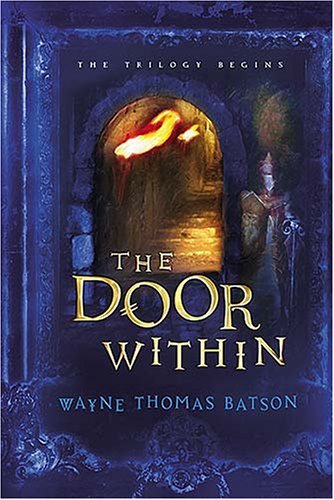
The Door Within - Wayne Thomas Batson
In the tradition of C.S. Lewis, Batson has written a rather solid Christian fantasy book which combines adventure and faith without coming across as being preachy. Aidan, the main character, enters the kingdom of Alleble through the "door within" and discovers what a Mighty King can do with a little pawn. (Rating: A- / Grade Level: 5+)
Eragon; Eldest - Christopher Paolini
Young fantasy writer Paolini shows great promise, cranking out the first two installments of what will likely be a solid trilogy. Young Eragon must strengthen his skills and his resolve if he ever hopes to challenge the evil Galbatorix. Tolkien, Lucas, and LeGuin are clear influences -- (A- / 7+)
The Voyage of the Dawn Treader - C.S. Lewis
Certainly one of the finest of the Chronicles of Narnia, Dawn Treader is an exploration of tempation and the faithful Christian walk, resplendent with Lewis's imaginative power -- (A+ / 4+)

The Golden Compass - Philip Pullman
A young girl travels to the far north to rescue her friend while seeking to unravel the mystery of Dust and its dangerous role in her fantastic world. Pullman successfully weaves adventure, fantasy, and a bit of imaginative physics together in the first book of the trilogy His Dark Materials. (Rating: A / G.L. 6+)
Harry Potter and the Deathly Hallows - J. K. RowlingHarry Potter demonstrates to the wizarding world the power of sacrifice, loyalty, and love as he battles Voldemort in Rowling's last HP book...an outstanding finale. Parents, screen the book for your children due to some strong language use and shocking imagery. (Rating: A / G.L. 7+)

Harry Potter and the Half-Blood Prince - J.K. Rowling
The stakes are high during year six at Hogwarts. Harry suspects Malfoy of carrying out a deadly plan for Voldemort, Snape seems to confirm Harry's long suspicions, and Dumbledore enlists Harry's help in unraveling the mystery of Voldemort and his rise to power. Year six also finds Harry and friends struggling with an equally daunting task: trying to figure out the opposite sex and the rules of love. (Rating: A / G.L.: 7+)

The Prophet of Yonwood - Jeanne DuPrau
In this prequel to The City of Ember, 11-year-old Nickie travels with her aunt to fix up an old home, armed with big plans and an even larger curiousity. She meets a Mrs. Beeson, whose ambitions to protect her town from nuclear disaster ensnare Nickie in a misguided witch-hunt for all "sinners." Readers will be underwhelmed by this book and left confused as to what truly is the source of truth and righteousness. (Rating: B- / G.L.: 6+)

The Final Storm - Wayne Thomas Batson
The conclusion of the Door Within trilogy hums with intense battle sequences, life and death struggles, wrestling for the souls of men, all the things that made the first two books enjoyable (but on a larger scale). Readers will revel and rejoice in the last few pages of the book as they imagine for themselves that final battle and the manifestation of a new Kingdom that will never end. (Rating: A+ / G.L. 5+)

The Rise of the Wyrm Lord - Wayne Thomas Batson
Readers of the first book in The Door Within trilogy may be surprised that Aiden has a minor role in this second installment, but they will surely enjoy meeting Antoinette--brave, stubborn, faithful,...hair dyed red. The action intensifies as Paragor unleases an ancient menace and the battle for men's souls wages ever more fiercely. You'll want to pick up the third book as quickly as you can. (Rating: A / Grade Level: 5+)

The People of Sparks - Jeanne DuPrau
After escaping the dying city of Ember, Lina and Doon lead their people above ground into a strange, new, marvelous, and deadly world. The Emberites find help and shelter from the people of Sparks, but as tensions mount, Lina and Doon hope to avoid the same mistakes their ancestors made which led to the great Disaster. (Rating: A- / Grade Level: 4+)
The City of Ember - Jeanne DuPrau
A masterful work of science fiction, The City of Ember launches DuPrau's promising career as a novelist. In a city where no one has the answers to food and supply shortages, where darkness reigns but for the ever-present amber streetlights, where even the Builders could not have foreseen the imminent disasters, two young heroes seek for answers. Salvation must be found! (Rating: A+ /Grade Level: 4+)
Cassie's family fights to hold onto their land and livelihood in the segregated South while Cassie learns to face life with her chin up -- (A- / 6+)
The Navajo branch of the Trail of Tears is illuminated from a young woman's perspective in this haunting and beautiful historical work -- (B+ / 6+)
Sterling North recounts his explorations of the Wisconsin countryside with his racoon, Rascal--a true portrait of a naturalist -- (B / 5+)
Rub shoulders with John Adams, Paul Revere, and others as you travel with Johnny through Boston on the brink of war -- (A / 6+)
Roman occupiers. Jewish zealots fomenting rebellion. A boy bent on revenging his father's death. Jesus Christ. One powerful story -- (A / 6+)
Taylor shows his familiarity with the northeast English landscape and English myths in this ambitious attempt at Christian fantasy -- (B / 6+)
Controversy surrounds this hugely popular fantasy series, but few deny Rowling possesses a wide imagination and keen sense of humor (B+ / 7+)

The Door Within - Wayne Thomas Batson
In the tradition of C.S. Lewis, Batson has written a rather solid Christian fantasy book which combines adventure and faith without coming across as being preachy. Aidan, the main character, enters the kingdom of Alleble through the "door within" and discovers what a Mighty King can do with a little pawn. (Rating: A- / Grade Level: 5+)
Eragon; Eldest - Christopher PaoliniYoung fantasy writer Paolini shows great promise, cranking out the first two installments of what will likely be a solid trilogy. Young Eragon must strengthen his skills and his resolve if he ever hopes to challenge the evil Galbatorix. Tolkien, Lucas, and LeGuin are clear influences -- (A- / 7+)
Certainly one of the finest of the Chronicles of Narnia, Dawn Treader is an exploration of tempation and the faithful Christian walk, resplendent with Lewis's imaginative power -- (A+ / 4+)
Wednesday, November 01, 2006
Atheists Worship Three Gods
As I see it, atheists worship three gods: Nature, Coincidence, and Time. Let me explain.When confronted with the astounding variety of life on Earth with all its manifested beauty, an atheist marvels at Nature's handiwork. When exploring the workings of the spinning tail of a bacteria, the atheist exclaims, "Look how resourceful Nature is, even producing sophisticated machines by modifying old genes for new uses." When peering into the intricate coding of DNA with its massive information content, Mr. Atheist expresses praise to clever Nature and her awe-inspiring ability to create something out of nothing. Need more evidence that this view is pervasive among atheists? Read the article titled "A Fin Is a Limb Is a Wing: How Evolution Fashioned Its Masterworks" in the Nov. '06 issue of National Geographic.
Close kin to the goddess Nature is the patient, persistent god called Time. Occasionally, an atheist may come face to face with a biological system that defies evolutionary explanation...one that's far removed from the next less complex system. Probability dictates that there is very little chance that random mutations generated the system with all its interdependent parts and functions. In a moment of great panic and need, Mr. Atheist calls upon Time; he seldom fails. After all, given enough time, Nature and Time can work together to perform the miraculous by gradually taking just the right concerted steps in just the right concerted sequence over, say, several hundred million years. Plus, Time has the ability to confound our finite minds, and so it is easy to persuade his followers that given enough eons, anything is possible.
If you ever have the pleasure, I mean opportunity, to present a truly unexplainable phenomenon to an atheist, he will appeal to another favorite god: Coincidence. He is a crafty deity, able to explain away any difficulty with surpassing ease. For example, suppose you send up a very specific prayer (be sure to write it down) to the Lord of the Universe which gets answered in a mighty way. When you discuss this great work of God with an atheist friend, he will wave his hand nonchalantly and attribute this convergence of events as the work of Coincidence. He then need not trouble himself about it anymore. Coincidence, indeed, seems a very powerful god to our unbelieving friends.
Monday, October 30, 2006
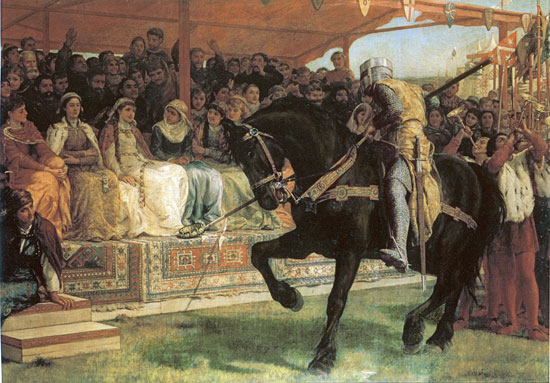
Ivanhoe, Conquered
Ivanhoe - Sir Walter Scott, B+After a long pull, I've made it through this classic historical novel. I can't say that I loved the experience, though neither did I dislike it.
"...imagine what a Snickers tastes like after having eaten a delicious mango or luscious nectarine."Ivanhoe portrays 12th century England with a Romantic flair. As expected, the reader finds glaring hypocricies interposed with moments of chivalry; blind prejudices contrasted with holy sacrifices. One respects its hero, cherishes its heroine Rebecca, and laughs appropriately at the pomp and masquerading of "holy" men and royal officials. Scott has woven his tapestry using threads of legend, strands of history (though at times very inaccurately), and golden ribbons of romance to create a narrative that moves along at a moderate pace. Though I am susceptible to distraction, I was able to finish the book, which says something.
Overall, my response can best be described by imagining what a Snickers tastes like after having eaten a delicious mango or luscious nectarine. You enjoy the pastry, but not in the same way. Ivanhoe does not compare to works by C.S. Lewis or Homer, but certainly it far outpaces most modern fiction. It is a book that one reads because it seems everyone has read it; and it must be good if everyone has read it. While the book is worthy of no small praise, I would not recommend it to the casual reader, the reader looking for deep truths, or those with little time for frivolities.
Saturday, October 28, 2006
Aquanaut
Aquanaut (Abstract No. 2)

I just returned from a men's conference and will post a few of my reflections by the end of the weekend. Blessings!

I just returned from a men's conference and will post a few of my reflections by the end of the weekend. Blessings!
Tuesday, October 24, 2006
The Writer, The Voyeur
During my first visit to John's site, Blog Meridian, his recent post struck a chord with me. He explores the random evidences that lives are being lived all around him, lives with which he has no contact but through glimpses into the public-private narratives being spun day by day.Ever since I was a kid delivering newspapers, I've had a fascination with the narratives undergirding other people's lives. At times, you can almost see how close the web of their lives and social connections/interactions comes to your own. Truly, I don't think I've ever escaped this fascination.
Perhaps the great writers of the world have all been "voyeurs" in some sense. It is those who are truly awake to their surroundings and the wonders of the human space who are able to capture characters realistically, to encapsulate our struggles in a simple narrative, to distill all life into an extended metaphor that just rings with truth. Whimsical musings about the events that transpired to leave, say, a wine glass on a bridge rail (as in John's example) can be excellent practice for a budding author. Sometimes, even, such simple images can inspire entire novels.
For a writer to stop observing is to die.
The Limits of the Human Brain
(1 equals .9 repeating)
I just read several of the really simple mathematical proofs of the above equation, and while my brain agrees with the proofs, another part of my brain seems like it is trying to disagree. It's a really weird feeling! Truly, our human brains have limits. I can't wait to visit with the Creator and share a good laugh about all the incredible mathematical puzzles He gave us to occupy our time and show us our shortcomings.
Monday, October 23, 2006
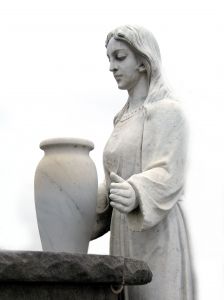
The Forgotten Statue

Frozen in a moment of time
Yes, frozen, as most statues are
And marble too: mostly cold and
Still, in a forgotten place without
Anyone to wonder who she was
Or how she came to be memorialized
In stone. So cold and alone
She sits by a well in eternal service,
Forever offering water to passers-by
Who never come or come unthirsty
Like Christ, who understands
What it means to be forgotten by most
As He waits, and offers, and is thought
Cold and stone like most statues are.
Sunday, October 22, 2006
God as Romantic, Pt. 2
God does have a relationship with us that mirrors the relationship between husband and wife. That being said, think back to when romantic gifts and gestures were the most frequent: courtship. These things may serve to woe a mate, but they are not the foundation of a solid marriage.
As a marriage matures (past the honeymoon), romantic gifts are infrequent, and therefore are a poor barometer for how a mate feels about his/her spouse. Self-sacrifice, service, and affirmation are the tools of a dedicated spouse to communicate true love to his/her significant other.
In addition, not all signs have a special meaning. It is all too easy to see a heart-shaped rock, assume God is smiling at me, and continue with my life--even if I have major sins in my life. I imagine that Satan could have a field-day with sign-dropping in order to mislead fallen Christians (or unbelievers!) into thinking that all is well with their souls.
Thank you, Ariel, for bringing Tim's critique to my attention. It started a helpful discussion at my house!
As a marriage matures (past the honeymoon), romantic gifts are infrequent, and therefore are a poor barometer for how a mate feels about his/her spouse. Self-sacrifice, service, and affirmation are the tools of a dedicated spouse to communicate true love to his/her significant other.
In addition, not all signs have a special meaning. It is all too easy to see a heart-shaped rock, assume God is smiling at me, and continue with my life--even if I have major sins in my life. I imagine that Satan could have a field-day with sign-dropping in order to mislead fallen Christians (or unbelievers!) into thinking that all is well with their souls.
Thank you, Ariel, for bringing Tim's critique to my attention. It started a helpful discussion at my house!
Subscribe to:
Posts (Atom)